If you are buying a plot or home in Punjab, understanding the role of the Punjab Urban Planning and Development Authority (PUDA) can help you make more informed property decisions. PUDA operates within Punjab’s urban planning and development framework, alongside regional development authorities and other competent authorities responsible for specific areas and approvals.
This guide explains the PUDA full form, its role and history, the difference between PUDA and GMADA, and what buyers should know about NOCs, unauthorised colonies, regularisation and property verification before making a payment.
What Is PUDA in Punjab? PUDA Full Form and Meaning
PUDA full form: Punjab Urban Planning and Development Authority.
PUDA is a statutory body of the Government of Punjab, set up on 1 July 1995 under the Punjab Regional and Town Planning and Development Act, 1995. It is the state’s apex authority for planning and developing urban and suburban areas.
In simple terms, if you ask what is PUDA, it is the body that:
- Plans cities — prepares long-term strategic plans and local area plans
- Controls land use — decides how land in declared urban areas can be used
- Licenses colonies — approves private colonisers who want to develop townships
- Develops land itself — builds urban estates, residential colonies and commercial complexes
- Guides regional authorities — acts as the umbrella over GMADA and five other development authorities
PUDA Punjab’s headquarters, PUDA Bhawan, is in Sector 62, SAS Nagar (Mohali).
History of PUDA Punjab
Before 1995, colonies in Punjab often came up without proper roads, drainage or approvals, and buyers had little way to check whether a plot was legal. The state responded with two laws in 1995 and has adjusted the system several times since:
- 1995 — PUDA is created under the Punjab Regional and Town Planning and Development Act. The Punjab Apartment and Property Regulation Act (PAPRA) is passed the same year to regulate colonisers and builders.
- 2006–07 — Six regional development authorities are set up to handle planning on the ground, with PUDA as their umbrella body.
- 2013 and 2018 — The state passes special laws to regularise unauthorised colonies and plots, with the 2018 law covering sales made before 19 March 2018.
- 2015 — A proposal to merge PUDA is made but never implemented.
- 2024–2025 — NOC-free registration: Punjab introduced a time-limited exemption for certain plots in unauthorised colonies through an amendment to PAPRA. Subsequent court proceedings and government instructions affected the registration process. Buyers should confirm the current legal position with the relevant registering authority before relying on an exemption.
- 2026 — Regularisation policy: The Punjab Cabinet approved proposed changes to Rule 31 to provide a route for eligible unauthorised colonies to seek regularisation. The reported application deadline was 30 September 2026. Confirm the applicable government notification and the status of any application before assuming a colony qualifies.
Today, PUDA Punjab remains the state’s apex planning body, with the Chief Secretary heading the development authorities.
How PUDA Punjab Protects Buyers: Key Rules
PUDA’s rules exist mainly to stop buyers from paying for plots that can never be legally registered or built on. These are the ones to know:
- Coloniser licences (PAPRA, 1995) — a private coloniser must hold a licence before developing or selling plots. A colony without one is unauthorised.
- Property registration and NOCs — Registration requirements depend on the property’s legal status and applicable law. Section 20 of PAPRA restricts registration of sale documents for plots in unlicensed colonies, subject to the applicable statutory provisions and any valid exemption. Confirm the current requirements with the competent authority and the Sub-Registrar before proceeding.
- Change of land use (CLU) — agricultural land must get CLU permission before it can be developed for housing or commerce.
- Approved layout plans — roads, parks, sewerage and other services must be planned and approved before plots are sold.
- Building rules — the PUDA Building Rules, 1996 set norms such as setbacks, height, coverage and parking.
- RERA registration — most new projects must also be registered with the Real Estate Regulatory Authority, Punjab before they can be marketed.
- Approved lists — regional authorities publish lists of approved colonies, promoters and estate agents on their websites.
PUDA vs GMADA vs Municipal Corporation
The PUDA GMADA question confuses many buyers, and the local municipal corporation adds a third office to the picture. Here is how they differ:
| PUDA | GMADA | Municipal Corporation | |
| Area | State-level urban planning and development framework | Greater Mohali region and other areas listed in its notified jurisdiction | One city or town |
| Role | Apex planning and policy body | Regional development authority under PUDA | Civic body |
| Set up | 1995 | 2006 | Varies by city |
| Main work | State-level planning, colony licensing, land-use policy | Sector planning, plot allotment, e-auctions in its area | Water, sanitation, property tax, local roads |
PUDA Jurisdiction: The Regional Development Authorities
PUDA forms part of Punjab’s wider urban planning and development framework. Regional development authorities handle planning and development within their respective notified areas. The relevant authority for a property depends on its location, the type of approval required and the records involved.
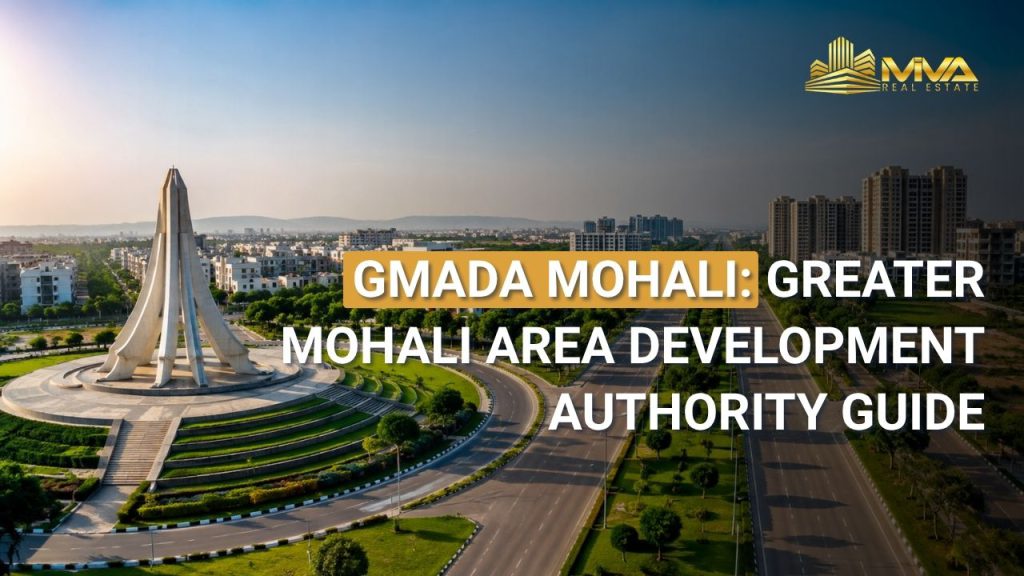
- GMADA (Greater Mohali Area Development Authority) — Mohali (SAS Nagar), Kharar, Zirakpur, New Chandigarh and nearby areas. Its office is at PUDA Bhawan, Sector 62, Mohali.
- GLADA (Greater Ludhiana Area Development Authority) — Ludhiana region.
- ADA (Amritsar Development Authority) — Amritsar region. Its office is at PUDA/ADA Bhawan, Puda Colony, Green Avenue.
- JDA (Jalandhar Development Authority) — Jalandhar region. Its office is at PUDA Complex, Ladowali Road.
- PDA (Patiala Development Authority) — Patiala region. Its office is at PUDA Complex, Urban Estate Phase II.
- BDA (Bathinda Development Authority) — Bathinda region. Its office is at PUDA/BDA Complex, Bhagu Road.
PUDA Mohali vs GMADA: PUDA and GMADA are not interchangeable. GMADA is the regional development authority for its notified area, while PUDA operates within the wider state planning and development framework. For a property in Mohali, Zirakpur, Kharar or another nearby location, confirm which authority holds the relevant property record and is responsible for the required approval.
What PUDA Develops: Colonies, Complexes and Markets
Alongside planning, PUDA and its regional authorities build and sell land themselves. Buyers usually meet this work in three forms.
PUDA Colony
A PUDA colony is a residential area developed by PUDA or a regional authority, often called an urban estate. Plots in a PUDA colony are allotted or e-auctioned by the authority, so the layout, roads and services are planned from the start. This is different from a private colony, which a licensed coloniser develops under PUDA’s approval.
PUDA Complex
The term PUDA complex is used in two ways:
- Office complexes — regional authorities work from buildings called PUDA Complex, such as those in Jalandhar, Patiala and Bathinda.
- Commercial complexes — shop-cum-office (SCO) sites and booths that PUDA develops in its urban estates.
PUDA Market
A PUDA market is a commercial area within a PUDA-developed estate, with shops, booths and SCOs. Sites are usually sold through e-auction, and the authority publishes notices with reserve prices on its website.
How a PUDA e-Auction Works
Most fresh residential plots and PUDA market sites from PUDA and the regional authorities are sold through online e-auctions. The process usually looks like this:
- Watch for the auction notice — it lists the sites, reserve prices, dates and payment terms.
- Register on the e-auction portal — complete your registration and KYC before bidding opens.
- Pay the participation deposit — as specified in the notice.
- Place your bid — within the bidding window.
- Pay the initial amount if you win — within the time set in the notice, to confirm the allotment.
- Pay the balance — as a lump sum or in installments, depending on the scheme. Some schemes offer a rebate for early payment.
PUDA and its regional authorities may offer residential plots and commercial sites through online e-auctions. The eligibility conditions, registration process, earnest money deposit, bidding schedule and payment terms vary by scheme. Always follow the official notice for the property you want to bid on.
How To Check PUDA Property Status and Pay Dues Online
Start at the official PUDA portal and select the relevant authority. After choosing your authority, you can:
- Track your application — using your application or property details
- View dues — such as pending instalments, interest or other charges
- Pay online — without visiting the estate office
- Download notices and forms — for transfers, NOCs and other services
PUDA lists a citizen services helpline, 1800 180 0062, on its website.
PUDA NOC: When You Need One
A PUDA NOC (No Objection Certificate) may be relevant when verifying a property’s eligibility for registration or obtaining a specific approval. The requirement depends on the property’s status, the applicable law and the authority responsible for the area. Buyers should distinguish between an NOC connected with an unauthorised colony and separate clearances that may apply to construction near defence installations or other restricted zones.
1. NOC for Plot Registration
Section 20 of the Punjab Apartment and Property Regulation Act, 1995 (PAPRA) contains restrictions relating to the registration of sale documents for plots in unlicensed colonies. An amendment in 2024 introduced a time-limited exemption for certain eligible plots, subject to specified conditions and dates. Subsequent court proceedings and government instructions affected the operation of the exemption.
Do not assume that a property qualifies for NOC-free registration because it meets the plot-size or document-date criteria alone. Confirm the current legal position with the relevant development authority and Sub-Registrar before signing or registering a sale deed.
- Plot size: up to 500 square yards in an unauthorised colony
- Proof of purchase: a power of attorney, agreement to sell on stamp paper or similar document signed on or before 31 July 2024
- Registration window: NOC-free registration opened on 1 December 2024 and was later extended to 31 August 2025
The legal position on NOC-free registration has changed through statutory amendments, court proceedings and government instructions. Do not assume that a plot is eligible for registration—or that an NOC is required or waived—based only on its size or the date of an agreement. Before proceeding, confirm the current requirements with the competent development authority and the relevant Sub-Registrar.
2. NOC for Construction in Sensitive Areas
Construction near defence establishments, airports or other notified restricted areas may require additional clearance from the relevant competent authority. The applicable requirements depend on the property’s location and proposed construction. These clearances are separate from an NOC related to registration of a plot in an unauthorised colony.
PUDA Regularization: Colonies, Plots and Buildings
PUDA regularization is the process of legalising property that was developed or built without proper approval. It covers three different situations:
- Unauthorised colonies — colonies developed without a licence. The 2026 Rule 31 scheme covered colonies where at least 25% of plots are built. The promoter or the RWA applies, and pays 5% of the collector rate on the colony’s gross area (10% for commercial colonies).
- Individual plots — plots bought in unauthorised colonies. Past schemes set cut-off dates, such as 19 March 2018. Under the 2026 scheme, individual owners cannot apply on their own, so the colony is regularised as a whole.
- Building violations — construction that breaks building rules. Some deviations can be compounded for a fee if they stay within permitted limits and are structurally safe.
The 2026 regularisation policy: In July 2026, the Punjab Cabinet approved proposed changes to Rule 31 of the Punjab Apartment and Property Regulation Rules. Published reports stated that eligible colonies could apply by 30 September 2026, subject to the policy conditions, and that colonies within GMADA’s Regional Plan area were excluded from the announced framework.
As the reported deadline has passed, property owners should check the latest government notification and the relevant authority’s portal for any extension, further instructions or updates on an existing application. Cabinet approval alone should not be treated as proof that an individual property has been regularised.
How to apply: regional authority websites carry the forms and instructions, for example under “Apply for Regularization of Unauthorized Colony”. Requirements and fees change with each policy, so check the current notification before you apply.
PUDA regularization schemes have been announced several times, and each has its own deadlines and rules. Don’t assume a plot will be regularised later just because earlier schemes existed.
Conveyance Deed, LOI Transfer and Plinth Certificate
Three documents come up again and again in PUDA property deals:
- Allotment letter or letter of intent (LOI) — issued after you win an auction or are allotted a plot. Resale plots are often sold on the basis of an LOI or allotment letter, and the transfer must be recorded with the concerned Estate Officer.
- Conveyance deed — The document through which the authority conveys its interest in the allotted property to the allottee, subject to the applicable scheme and completion of required formalities. For resale properties, also verify the registered transfer documents and the authority’s records rather than relying on the conveyance deed alone.
- Plinth level certificate — confirms your construction has reached plinth level in line with the sanctioned plan, before you build further.
When buying a resale plot, ask to see all three, as applicable, along with proof that each transfer was recorded by the authority.
Popular Areas Under PUDA’s Regional Authorities
PUDA’s regional authorities operate across several urban areas of Punjab. Buyers researching property in Mohali, New Chandigarh, Zirakpur, Kharar, Ludhiana, Jalandhar, Patiala, Amritsar or Bathinda should identify the authority responsible for the specific property before checking its approvals.
- Mohali (SAS Nagar) — GMADA-developed sectors close to Chandigarh, often called the PUDA Mohali belt
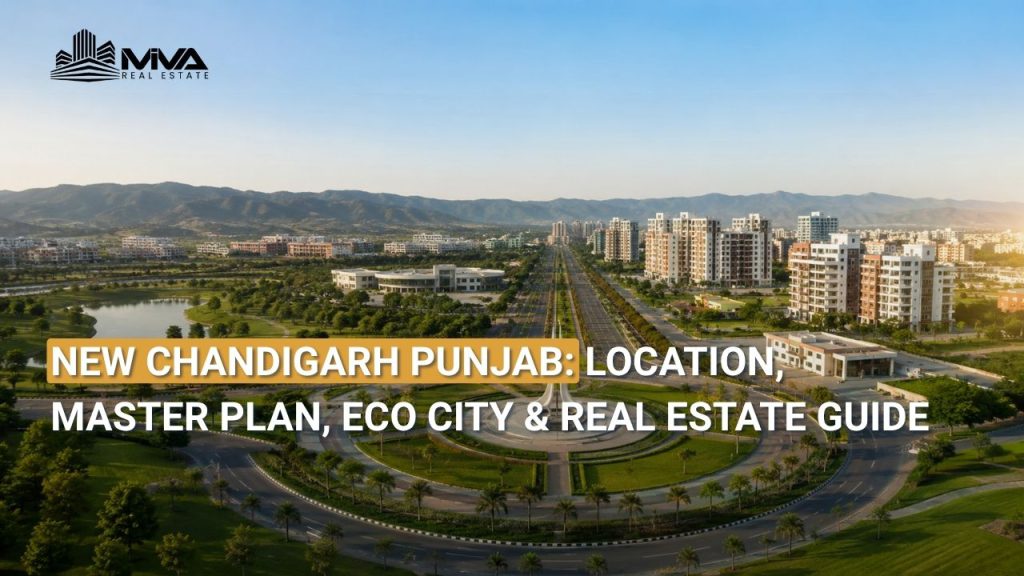
- New Chandigarh — GMADA’s planned townships, such as Eco City
- Zirakpur and Kharar — fast-growing areas on major road links
- Ludhiana, Jalandhar, Patiala, Amritsar and Bathinda — urban estates developed by GLADA, JDA, PDA, ADA and BDA
Wherever you buy, run the checks below first.
Buyer Safety Checklist Before You Pay
Use these checks before you pay a token amount for any plot or home in an area under PUDA Punjab or a regional authority:
- Approved colony status: Tell buyers to check the current official list and confirm that the listing matches the exact colony and phase.
- Verify the coloniser or promoter — check their licence and, for projects, their RERA registration number on the Punjab RERA website.
- Ask for the layout plan and CLU — make sure the plot number and size match the approved plan.
- Confirm registration eligibility — Ask the relevant authority and Sub-Registrar which approvals and documents are required for the specific property. Do not rely on a seller’s assurance that an NOC is unnecessary without verifying the property’s legal status and any applicable exemption.
- Check for regularisation fees — if the plot or building was regularised, ask for proof of PUDA regularization and payment of any composition fees.
- Review the title chain — for resale plots in a PUDA colony, check the allotment letter, transfer records and conveyance deed.
- Check dues online — use the authority’s citizen services portal to confirm there are no pending installments.
- Avoid power of attorney-only deals — insist on a registered sale deed rather than relying only on a power of attorney or agreement to sell.
For property in the PUDA Mohali belt, the same checks apply through GMADA’s records, because the PUDA GMADA structure places plot files in that region with GMADA.
Conclusion
PUDA Punjab plays an important role in the state’s urban planning and development framework, while regional authorities such as GMADA handle responsibilities within their notified areas. For property buyers, understanding which authority holds the relevant records is an essential first step.
Before buying a plot or home, verify the colony’s approval status, title documents, registration eligibility, applicable NOCs and outstanding dues. These checks can help you identify potential legal or administrative issues before committing your money.
Frequently Asked Questions
Can NRIs buy property from PUDA or its regional authorities?
NRIs and eligible OCI cardholders can generally purchase residential and commercial immovable property in India, subject to applicable FEMA rules. They generally cannot purchase agricultural land, plantation property or farmhouses under the standard permission. However, eligibility for a particular PUDA or regional-authority allotment or e-auction depends on the scheme’s terms, so check the applicable conditions before bidding.
Does PUDA cover property in Chandigarh?
No. Chandigarh is a Union Territory with its own administration, so PUDA’s rules apply only within Punjab. Nearby areas in the PUDA Mohali belt, such as Mohali, Zirakpur and Kharar, do fall under the PUDA GMADA system.
Can I get a home loan for a plot in an unauthorised colony?
It is difficult. Most banks lend only against properties with clear title and approvals, so a plot in an unapproved colony without an NOC or regularisation is usually hard to finance.
What happens if I build without an approved building plan?
Unapproved construction can lead to notices, penalties or even sealing and demolition. Some minor deviations can be compounded for a fee, but it is safer to get the plan approved before you build.
Can I sell or transfer a PUDA plot before paying all installments?
Transfers usually need the authority’s approval and clearance of pending dues, plus a transfer fee. Check the terms of your allotment scheme with the Estate Officer before agreeing a sale.
Buying Property in Punjab? Verify Before You Commit
Before purchasing a plot or home, make sure you understand its approval status, title documents, registration requirements and outstanding dues.
Acquire Estate can help you review key property documents and identify the checks to complete with the relevant authority before proceeding with a purchase.
Planning to buy in Mohali or elsewhere in Punjab? Speak to our property experts for guidance on your next steps.